
Can a homeschooled student get a diploma? Yes, homeschooled students can absolutely get a diploma. There are several pathways to achieve this, ranging from programs that issue their own diplomas to using equivalency tests. This guide will explore your options for homeschool graduation and obtaining a valid homeschool credential.
Navigating the path to a high school diploma at home can seem complex, but with the right information, it’s a clear and achievable goal. Many parents and students wonder about the best way to formalize their homeschool education with a recognized diploma. This detailed guide is designed to walk you through the entire process, from understanding different homeschooling diploma requirements to exploring various homeschool diploma programs and alternatives like the GED for homeschool students. We’ll also cover how to find accredited homeschool diplomas and online homeschool diplomas, and what constitutes equivalency for homeschool education.
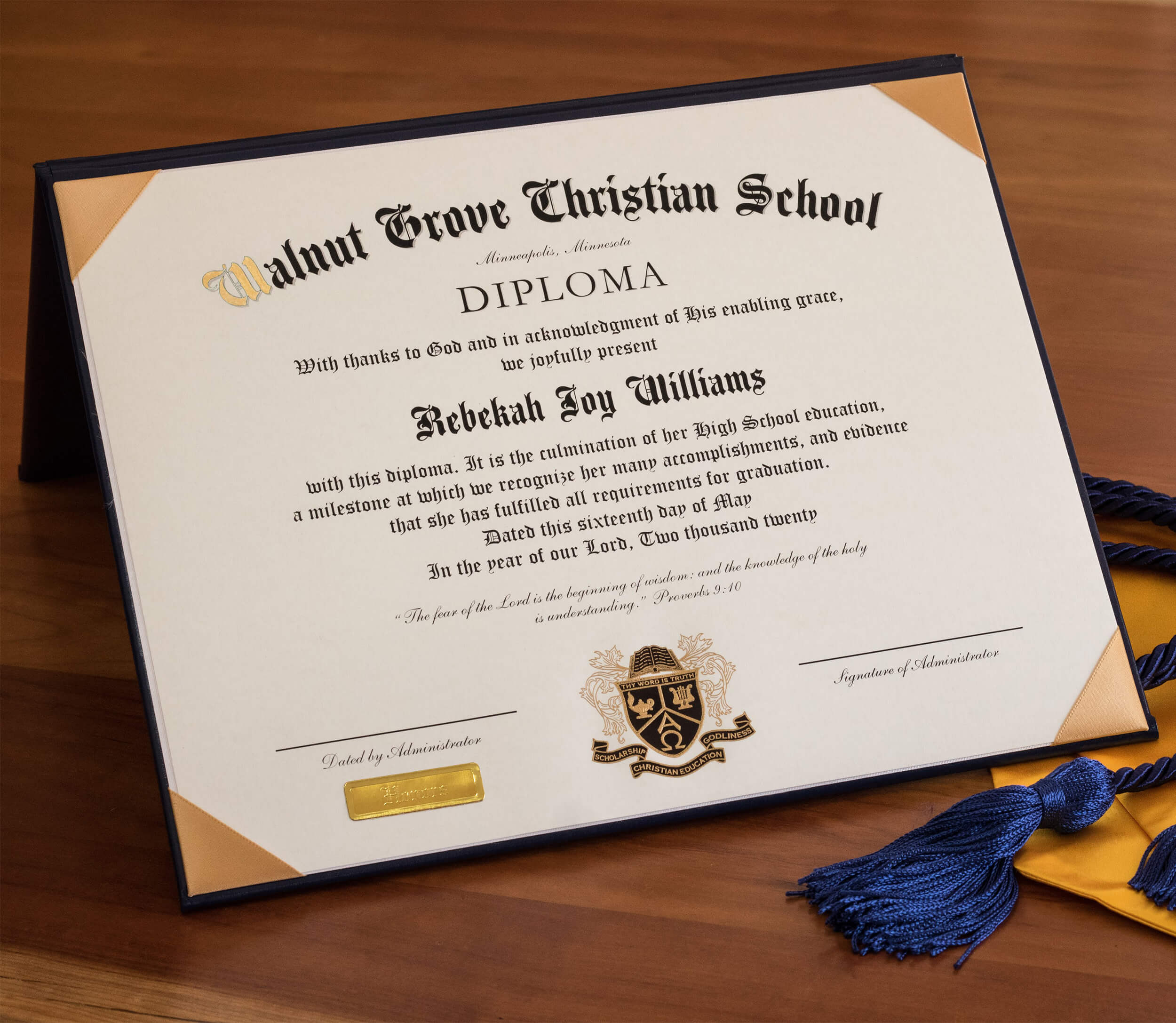
Image Source: www.homeschooldiploma.com
Pathways to a Homeschool Diploma
The world of homeschooling offers diverse approaches to high school education, and consequently, to earning a diploma. It’s not a one-size-fits-all situation. Many states do not mandate specific graduation requirements for homeschoolers, leaving the responsibility to parents and their chosen curriculum or program. This flexibility is a hallmark of homeschooling but also means you need to be proactive in determining the best route for your child.
Homeschooling Through Accredited Programs
One of the most straightforward ways to obtain a recognized diploma is by enrolling your child in an accredited online or correspondence school. These institutions are recognized by educational bodies and often have established curriculum and graduation requirements that meet national or regional standards.
Benefits of Accredited Programs:
- Recognition: Diplomas from accredited institutions are generally well-accepted by colleges, universities, and employers.
- Structure: These programs provide a structured curriculum, lesson plans, and grading systems, which can ease the burden on parents.
- Record Keeping: The school typically handles transcript creation and record-keeping.
Choosing an Accredited Program:
When selecting an accredited program, look for accreditation from recognized agencies. Some popular options include:
- Cognia (formerly AdvancED): A large, internationally recognized accrediting body.
- Middle States Association of Colleges and Schools: Accredits institutions in the Middle States region of the US.
- New England Association of Schools and Colleges: Accredits institutions in the New England region.
- Northwest Accreditation Commission: Accredits institutions in the Northwest region.
- Southern Association of Colleges and Schools Council on Accreditation and School Improvement: Accredits institutions in the Southern region.
- Western Association of Schools and Colleges: Accredits institutions in the Western region.
Many dedicated online homeschool diplomas are offered by these types of accredited schools. These programs provide flexibility and cater to students who thrive in a home-based learning environment.
Issuing Your Own Homeschool Diploma
In many states, parents have the legal right to issue their own high school diploma to their homeschooled child. This is often considered the most independent route. However, it comes with the responsibility of ensuring the diploma reflects a rigorous and complete high school education.
Requirements for Self-Issued Diplomas:
To make a self-issued diploma valid and respected, it’s crucial to:
- Follow State Guidelines: Check your state’s homeschool laws regarding graduation requirements. Some states may have specific credit or coursework requirements.
- Maintain Thorough Records: Keep detailed records of all coursework, grades, attendance, and extracurricular activities. This documentation serves as proof of your child’s education.
- Create a Formal Transcript: Develop a comprehensive transcript that lists courses taken, credits earned, and grades received.
- Design a Professional Diploma: Create a diploma that looks official, including the student’s name, graduation date, school name (even if it’s just your family’s homeschool), and your signature as the administrator.
Making a Self-Issued Diploma Respected:
While you can issue your own diploma, its acceptance by colleges and employers depends on the perceived rigor of your homeschool program. To enhance its credibility:
- Use Reputable Curriculum: Employing well-regarded homeschool curriculum providers can strengthen the perception of your program.
- Consider Standardized Testing: While not always required, having your child take standardized tests (like the SAT or ACT) and achieving good scores can bolster their college applications.
- Portfolio Assessment: Compile a portfolio showcasing your child’s best work, projects, and achievements throughout high school.
Using the GED as Equivalency for Homeschool
The General Educational Development (GED) test is a standardized test that measures high school-level academic skills. For homeschoolers, particularly those who may not have followed a traditional curriculum or who are looking for an external validation of their academic achievements, the GED can serve as an equivalency for homeschool education.
When to Consider the GED:
- Late Entry into Homeschooling: Students who began homeschooling later in their high school years and want a standardized credential.
- Lack of Formal Records: If comprehensive records are not available.
- Alternative to Traditional Diploma: For students who prefer a different pathway to demonstrating their knowledge.
The GED Process:
- Eligibility: Check the GED testing requirements in your state or country. Age requirements typically apply.
- Preparation: Study materials and practice tests are available to help prepare for the four GED subject tests: Reasoning Through Language Arts, Mathematical Reasoning, Science, and Social Studies.
- Testing: GED tests are administered at authorized testing centers.
A GED certificate is widely recognized by colleges, vocational schools, and employers as equivalent to a high school diploma. It’s a valid option for homeschool graduation when a traditional diploma isn’t pursued or feasible.
Other Equivalency Options
Beyond the GED, there are other tests that can serve as equivalency for homeschool education, demonstrating academic proficiency.
High School Proficiency Tests:
Some states offer state-administered proficiency tests that, upon passing, can grant an equivalency to a high school diploma. These tests often focus on core academic areas and are a direct way to meet state requirements if applicable.
Credit by Exam:
Certain colleges and universities allow students to earn college credit through examinations (like the CLEP or DSST exams). While these are more geared towards college credit, strong performance can also be a component in demonstrating high school-level academic achievement.
Homeschool Graduation: Planning and Requirements
Successful homeschool graduation hinges on careful planning throughout the high school years. It’s about meeting academic goals and preparing for the next steps, whether that’s college, vocational training, or entering the workforce.
Homeschooling Diploma Requirements: What to Know
While specific requirements vary greatly by state and the chosen diploma path, common elements include:
-
Credit Accumulation: Most high school diplomas, whether traditional or homeschool, require a certain number of credits across various subjects. Typical requirements include:
- English/Language Arts: 4 credits
- Math: 3-4 credits
- Science: 3-4 credits (including lab science)
- Social Studies/History: 3-4 credits
- Foreign Language: 2-3 credits
- Electives: Various credits in areas like fine arts, computer science, career and technical education, etc.
-
Coursework Completion: Ensuring all required courses are covered and successfully completed. This can be done through textbooks, online courses, community college classes, or structured homeschool diploma programs.
-
Standardized Testing (Optional but Recommended): While not always mandatory for a homeschool diploma, standardized tests like the SAT or ACT are crucial for college admissions.
-
Portfolio and Records: Maintaining detailed records and a portfolio of work is essential, especially if you plan to issue your own diploma.
Creating a Homeschool Transcript
A homeschool transcript is a formal document that lists all courses taken, credits earned, and grades received. It’s vital for college applications and scholarship opportunities.
Key Components of a Transcript:
- Student Information: Full name, address, contact information.
- School Information: Name of the homeschool (even if it’s your family name), address, accreditation status (if applicable).
- Academic Year: Clearly defined academic years of study.
- Courses: A list of all subjects taken.
- Credits: The number of credits earned per course.
- Grades: The grade received in each course.
- GPA: Grade Point Average, calculated based on the grades and credit weights.
- Standardized Test Scores: SAT, ACT, AP, or IB scores, if taken.
- Extracurricular Activities and Honors: A section to highlight achievements outside of academics.
- Date of Graduation/Completion: The official date the diploma is awarded.
Creating an accurate and professional transcript is a crucial step in the homeschool credentialing process.
Exploring Homeschool Diploma Programs and Options
The landscape of homeschool diploma programs is vast, offering flexibility and support for families. These programs range from fully accredited online schools to curriculum providers that offer diplomas upon completion of their coursework.
Accredited Online Homeschool Programs
Many established institutions offer comprehensive K-12 education entirely online, culminating in an accredited high school diploma. These are excellent choices for families seeking a recognized credential without the administrative burden of creating their own program.
Features of Accredited Online Programs:
- Accreditation: They hold recognized accreditation, ensuring diploma validity.
- Teacher-Led Instruction: Often feature certified teachers who provide instruction and grading.
- Structured Curriculum: Follow a set curriculum with clear learning objectives.
- Online Platform: Utilize learning management systems for assignments, communication, and grading.
- Social Interaction: Many offer opportunities for online interaction with peers.
These programs are a popular source of online homeschool diplomas.
Curriculum Providers Offering Diplomas
Some secular and Christian curriculum providers offer their materials with the understanding that upon successful completion, they will issue a high school diploma. These are often less expensive than fully accredited online schools but may not carry the same weight of accreditation.
Considerations for Curriculum-Based Diplomas:
- Accreditation Status: It’s important to verify if the diploma is recognized by accrediting bodies or if it’s a self-issued diploma facilitated by the curriculum provider.
- Record Keeping: You will likely need to maintain your own academic records to support the diploma.
- Flexibility: These programs often offer more flexibility in pacing and course selection.
These can be a good option for homeschool credentialing if the program clearly states its diploma-issuing authority and the quality of its curriculum.
Distance Learning Diploma Options
Distance learning diploma programs are essentially synonymous with online homeschool programs. They leverage technology to deliver education to students outside of a traditional classroom setting. The key difference often lies in the delivery method and the level of parent involvement required.
Key Aspects of Distance Learning Diplomas:
- Remote Instruction: Courses are delivered online through videos, live sessions, or interactive modules.
- Self-Paced or Structured: Some programs are self-paced, while others follow a more structured school year calendar.
- Support Services: May include online tutoring, academic advising, and technical support.
The Role of Homeschooling Support Groups
Local and online homeschooling support groups can be invaluable resources for finding information on homeschooling diploma requirements, identifying reputable homeschool diploma programs, and connecting with families who have successfully navigated the process.
Benefits of Support Groups:
- Information Sharing: Access to local state laws and best practices.
- Program Reviews: Insights into various curriculum and diploma programs.
- Networking: Connections with other homeschool families, including those with high schoolers.
- Resource Recommendations: Guidance on tutors, standardized testing centers, and college application advisors.
Homeschool Credentialing: Ensuring Validity and Acceptance
Homeschool credentialing is the process of ensuring that the diploma or certificate your child receives is recognized by the institutions and employers they wish to engage with. This is where understanding the different pathways becomes crucial.
What Makes a Homeschool Diploma Valid?
A homeschool diploma is generally considered valid if it meets one or more of the following criteria:
- Issued by an Accredited Institution: Diplomas from recognized accredited online or correspondence schools hold significant validity.
- Issued by a State-Recognized Entity: In some states, homeschool associations or umbrella schools are recognized to issue diplomas.
- Self-Issued Diploma with Strong Documentation: A diploma issued by parents is considered valid if it is supported by meticulous academic records, a comprehensive transcript, and potentially, strong standardized test scores.
Gaining Acceptance for Your Homeschool Diploma
The acceptance of a homeschool diploma, particularly a self-issued one, often depends on the reputation of the curriculum used, the thoroughness of the student’s academic record, and the student’s performance on college entrance exams.
Tips for Enhancing Diploma Acceptance:
- Standardized Tests: Strong SAT or ACT scores are often the most significant factor in college admissions for homeschoolers.
- College-Level Courses: Earning college credit through AP courses, CLEP exams, or dual enrollment programs demonstrates academic readiness.
- Extracurricular Excellence: Highlighting achievements in areas like volunteering, sports, arts, or leadership can showcase a well-rounded student.
- Portfolio and Recommendations: A strong academic portfolio and well-written letters of recommendation from teachers or mentors can supplement the diploma.
Frequently Asked Questions About Homeschool Diplomas
Here are some common questions families have about obtaining a diploma for homeschooling.
Q1: Do I need to register my homeschool with the state to issue a diploma?
A1: This depends entirely on your state’s homeschool laws. Some states require registration, while others do not. Even if registration is not required, it’s always advisable to be familiar with your state’s homeschooling regulations regarding high school education and graduation.
Q2: What is the difference between a GED and a homeschool diploma?
A2: A GED is a standardized test that certifies a person has high school-level academic skills. It is an equivalency credential. A homeschool diploma is typically awarded by an educational institution (like an accredited school or, in some cases, the parents themselves) upon completion of a high school curriculum. For many purposes, particularly college admissions, both can be accepted, but the process and perception can differ.
Q3: Are online homeschool diplomas as good as traditional diplomas?
A3: If the online homeschool program is accredited by a recognized accrediting body, the diploma is generally considered equivalent to one from a traditional brick-and-mortar school. The key is the accreditation.
Q4: How do I prove my child’s homeschool education for college applications?
A4: Colleges will typically require a homeschool transcript, a copy of the homeschool diploma, and standardized test scores (like SAT or ACT). They may also ask for a letter of intent from the parents detailing the homeschool program’s structure and curriculum. A portfolio of work can also be beneficial.
Q5: Can I use a curriculum provider’s diploma if they are not accredited?
A5: You can accept a diploma from a curriculum provider that is not accredited, but its acceptance by colleges and employers may be limited. You would essentially be issuing your own diploma, using their curriculum as the basis. In such cases, maintaining excellent records and achieving strong standardized test scores becomes even more critical.
Q6: What are “umbrella schools” and how do they relate to homeschool diplomas?
A6: Umbrella schools, also known as cover schools or independent study programs, are legitimate private schools that accept homeschooled students as students of record. They provide a framework for homeschooling, often managing records and issuing diplomas. This can be a good option for families who want the structure and diploma issuance of a school without the full online course structure of a traditional online school.
Q7: When should I start planning for my child’s homeschool high school diploma?
A7: It’s best to start planning during middle school, around 7th or 8th grade. This allows ample time to research options, select curricula, understand credit requirements, and make informed decisions about the best pathway to homeschool graduation. Early planning ensures a smoother and more successful high school experience.
Q8: Are there requirements for homeschooling graduation beyond academic credits?
A8: This varies greatly. Some accredited programs may have specific requirements regarding community service hours, standardized testing, or participation in certain activities. If you are issuing your own diploma, you set the requirements, but it’s wise to align them with general high school standards and college expectations.
By understanding these pathways and planning diligently, you can ensure your homeschooled student receives a valuable and recognized diploma, ready for their future endeavors.