
Preventing falls in the kitchen is crucial for everyone, especially seniors and those with mobility challenges. The primary ways to prevent falls in the kitchen involve minimizing slip hazards, ensuring good visibility with proper lighting, using non-slip mats and rugs, wearing appropriate footwear, and making necessary home modifications for kitchen accessibility.
The kitchen is often called the heart of the home. It’s where we prepare meals, gather with loved ones, and create lasting memories. But it can also be a place where accidents happen, particularly falls. Slipping and tripping can lead to serious injuries, turning a familiar space into a source of anxiety. Fortunately, with a little knowledge and some proactive steps, you can significantly reduce the risk of falls and keep your kitchen a safe haven.
This in-depth guide will delve into the key strategies for maintaining kitchen safety and preventing falls. We’ll explore common causes of kitchen falls and provide practical solutions to make your cooking space safer for everyone.
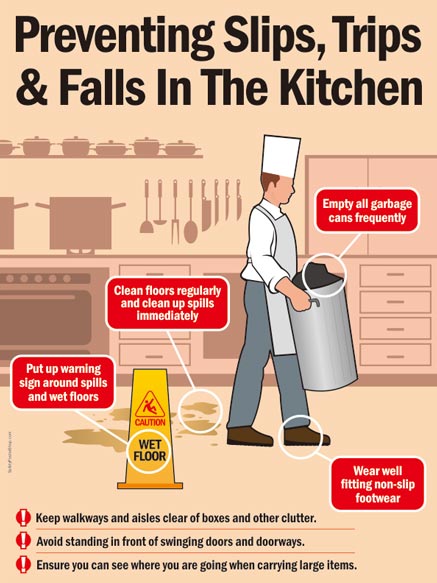
Image Source: www.safetypostershop.com
Identifying Common Slip Hazards
Slip hazards are the most frequent culprits behind kitchen falls. These are surfaces or conditions that make it easy to lose your footing. Recognizing and addressing these hazards is the first step to a safer kitchen.
Liquids and Greases
What are the most common liquid slip hazards?
- Water: Simple splashes from washing dishes or vegetables can create slick spots.
- Oil and grease: These are notoriously slippery and can spread easily from cooking or cleaning.
- Spilled beverages: Milk, juice, and other drinks can also make floors slippery.
- Condensation: From refrigerators or steaming pots, condensation can pool on the floor.
Food Debris
Small pieces of food, like dropped peas, chopped onions, or scattered crumbs, might seem harmless, but they can create surprising slip hazards.
Wet or Greasy Floor Mats and Rugs
While floor mats and rugs are often used to absorb spills and provide traction, they can become hazards themselves if they are not properly secured or if they become saturated with liquids.
Worn or Damaged Flooring
Flooring that is cracked, uneven, or peeling can create a tripping hazard. Smooth, worn flooring can also become very slippery when wet.
Other Potential Hazards
- Waxed floors: While they can look shiny, some floor waxes can make surfaces very slick.
- Polish or cleaning residues: If cleaning products are not fully rinsed away, they can leave a slippery film.
Strategies for Spill Prevention
Preventing spills in the first place is the most effective way to avoid slip hazards. Implementing good habits and using the right tools can make a big difference.
Smart Cooking Habits
- Use splash guards: When frying or cooking foods that tend to splatter, use a splatter screen to contain grease and liquids.
- Handle hot liquids with care: When carrying hot water or oil, ensure you have a firm grip and a clear path.
- Keep cooking surfaces tidy: Wipe up small spills as they happen, rather than letting them accumulate.
- Use sturdy pots and pans: Ensure your cookware has a stable base and comfortable handles.
Organization and Storage
- Store frequently used items within easy reach: This reduces the need to stretch or reach precariously for things.
- Use non-slip liners in cabinets and drawers: This helps prevent items from sliding and falling out when doors are opened.
- Secure appliances: Ensure appliances like toasters or blenders are placed on stable surfaces and don’t have cords that create tripping hazards.
Cleaning Up Spills Promptly
How quickly should spills be cleaned up?
Spills should be cleaned up immediately. Even a small amount of liquid can create a dangerous slip hazard, especially in a busy kitchen environment.
- Have cleaning supplies readily available: Keep paper towels, sponges, and a mop within easy access.
- Wipe up wet spots thoroughly: Ensure the area is completely dry after cleaning.
- Address grease spills with appropriate cleaners: Use degreasers to remove oily residues that can remain on surfaces.
The Role of Proper Lighting
Good visibility is a cornerstone of kitchen safety. Without adequate lighting, it’s much harder to spot potential slip hazards or trip hazards.
Why is Proper Lighting Important in the Kitchen?
Proper lighting allows you to:
- See spills and debris clearly: Making it easier to clean them up before they cause a fall.
- Navigate safely: Reducing the risk of tripping over objects or uneven surfaces.
- Read labels accurately: Avoiding mistakes with cleaning products or food items.
- Perform tasks with greater precision: Enhancing overall safety during cooking.
Enhancing Kitchen Lighting
- Illuminate all work areas: Ensure countertops, stovetop, and sink areas are well-lit.
- Consider task lighting: Under-cabinet lights can brighten countertops, while pendant lights can illuminate dining areas within the kitchen.
- Use bright, cool-toned bulbs: These generally provide better visibility than dim, warm-toned bulbs.
- Keep light fixtures clean: Dust and grime can dim the light output.
- Ensure switches are easily accessible: You should be able to turn on lights easily when entering the kitchen.
The Importance of Non-Slip Footwear
What you wear on your feet can significantly impact your stability in the kitchen. Wearing the right footwear can prevent many slips and falls.
Why Non-Slip Footwear Matters
- Provides Traction: The soles of non-slip shoes are designed to grip various surfaces, reducing the chance of slipping.
- Offers Support: Shoes with good ankle and arch support can improve balance.
- Protects Feet: They can shield your feet from dropped items or spills.
Choosing the Right Footwear
- Look for rubber or specialized non-slip soles: These materials offer the best grip.
- Avoid smooth-soled shoes or sandals: These offer little to no traction.
- Consider closed-toe shoes: These offer better protection and stability.
- Ensure a good fit: Shoes that are too loose or too tight can affect balance.
- For home use: Even at home, switching from socks or slippers to shoes with good grip when doing kitchen tasks can prevent falls.
Secure Rugs and Floor Mats
While floor mats and rugs can add comfort and style, they can quickly become major trip hazards if not properly managed.
Risks Associated with Loose Rugs
- Curling edges: Rugs can curl up at the edges, creating a perfect lip to catch a toe.
- Slipping: If not anchored, rugs can slide out from under your feet.
- Bunching: Over time, rugs can bunch up, creating uneven surfaces.
Ensuring Rug Safety
- Use non-slip rug pads: Place these under all rugs to keep them firmly in place.
- Secure with double-sided tape: For smaller rugs or runners, high-quality double-sided carpet tape can be very effective.
- Choose rugs with a non-slip backing: Many modern rugs come with this feature built-in.
- Avoid rugs in high-traffic areas if they cannot be secured: If a rug is constantly moving or curling, it’s safer to remove it.
Best Practices for Floor Mats
- Select mats with a non-slip backing: Similar to rugs, the backing is key.
- Ensure mats are the correct size: Mats that are too long can create a tripping hazard at their ends.
- Keep mats clean and dry: Absorbed liquids can make the mat itself slippery.
- Check for wear and tear: Replace mats that have worn-out backing or frayed edges.
- Consider beveled edges: Some mats have gently sloped edges that reduce the risk of tripping.
Addressing Trip Hazards
Beyond slips, tripping is another common cause of falls. These hazards involve objects or obstacles that can catch your feet.
Common Trip Hazards in the Kitchen
- Protruding appliances or cords: Toasters, mixers, or their cords can be left lying around.
- Open cabinet doors or drawers: Especially those that open into walkways.
- Footstools or chairs left in walkways: Items that aren’t put away properly.
- Uneven flooring or thresholds: Transition strips between different types of flooring can be a risk.
- Clutter: Anything that obstructs a clear path.
Eliminating Trip Hazards
- Keep walkways clear: Always ensure there is a clear path to move around the kitchen.
- Manage cords: Use cord organizers or run cords along walls and secure them so they don’t lie across pathways.
- Close cabinet doors and drawers promptly: Make it a habit to close them immediately after use.
- Put away furniture and equipment: Return stools, chairs, and other items to their designated places.
- Secure rugs and mats: As discussed earlier, this prevents bunching and curling.
- Consider flooring transitions: If thresholds are a problem, look into solutions like ramped reducers or ensuring flooring sits flush.
Enhancing Kitchen Accessibility and Home Modifications
For those who may have reduced mobility, balance issues, or vision impairments, making specific home modifications can greatly enhance kitchen accessibility and prevent falls. These changes focus on making the kitchen easier and safer to use for everyone.
What are Home Modifications?
Home modifications are changes made to a living space to make it safer and more functional for individuals with specific needs. In the kitchen, these can range from simple adjustments to more extensive renovations.
Key Modifications for Kitchen Safety
- Non-slip flooring: Installing highly slip-resistant flooring materials is one of the most effective modifications. Materials like textured vinyl, linoleum, or specific types of tile with a high coefficient of friction are excellent choices.
- Improved lighting: As mentioned, upgrading lighting to brighter, more even illumination is crucial. Consider motion-sensor lights for convenience.
- Grab bars: Installing sturdy grab bars near the sink, stove, or any area where extra support might be needed can provide stability.
- Countertop height and accessibility: Adjusting countertop heights or creating pull-out shelves can make tasks easier and reduce the need for extensive reaching or bending.
- Easy-to-use appliances and controls: Consider appliances with large, easy-to-read controls or lever-style handles on faucets, which are easier to operate.
- Sturdy seating: If a stool or chair is used for resting, ensure it is stable and has armrests for support.
- Clear pathways: Rearranging appliances or cabinets to create wider, unobstructed walkways can make a significant difference.
- Anti-fatigue mats: For prolonged standing, anti-fatigue mats can reduce leg strain and improve comfort, indirectly aiding stability.
- Stove safety: Consider stoves with controls that are not easily bumped or turned on accidentally, or use stove knob covers.
Planning for Accessibility
When considering home modifications, it’s often beneficial to consult with an occupational therapist or a home modification specialist. They can assess your specific needs and recommend the most appropriate changes for your kitchen.
Table: Common Kitchen Hazards and Their Solutions
| Hazard Type | Examples | Prevention/Solution |
|---|---|---|
| Slip Hazards | Water, oil, grease, food debris, wet mats | Clean spills immediately, use splash guards, store liquids securely, use floor mats with non-slip backing, wipe dry. |
| Trip Hazards | Cords, open drawers, clutter, loose rugs | Keep pathways clear, manage cords, close cabinets, secure rugs, tidy up. |
| Poor Visibility | Dim lighting, shadows | Install task lighting, use brighter bulbs, keep fixtures clean, ensure switches are accessible. |
| Unstable Footing | Smooth-soled shoes, slippery flooring, loose rugs | Wear non-slip footwear, use non-slip mats and rug pads, ensure flooring is in good condition. |
| Reaching/Bending | High shelves, low cabinets | Store items at accessible heights, use pull-out shelves, consider step stools with handrails if needed. |
Frequently Asked Questions (FAQ)
Q1: What is the most important factor in preventing kitchen falls?
A1: The most important factor is a combination of awareness and proactive prevention. This includes keeping the kitchen clean and dry, ensuring good lighting, using appropriate footwear, and securing rugs and mats.
Q2: Can I use regular household cleaning supplies to clean up grease spills?
A2: While some household cleaners can help, degreasers are specifically designed to break down grease and oil, making them more effective. Ensure you rinse thoroughly after using any cleaning product to avoid leaving a slippery residue.
Q3: Who is most at risk for falls in the kitchen?
A3: While anyone can fall, older adults, individuals with mobility issues, vision impairments, or certain medical conditions that affect balance are at a higher risk.
Q4: How often should I check my rugs and floor mats for safety?
A4: It’s a good idea to check them regularly, perhaps weekly, and also after any significant cleaning or if they are frequently disturbed. Look for curling edges, signs of wear on the backing, or if they are starting to slip.
Q5: Are there any specific types of flooring that are better for kitchen safety?
A5: Yes, flooring with a high coefficient of friction is best. Textured vinyl, linoleum, and certain ceramic or porcelain tiles with a matte finish are generally good choices. Avoid highly polished or glossy finishes, especially in areas prone to moisture.
Q6: What if I have limited space in my kitchen? How can I prevent falls?
A6: Even in small kitchens, maintaining clear pathways is essential. Be extra vigilant about closing cabinet doors and drawers, and consider multi-functional items to reduce clutter. Proper lighting is also amplified in importance in smaller spaces.
Q7: My elderly parent has trouble standing for long periods. What can help prevent falls while they are in the kitchen?
A7: Providing a sturdy, stable stool with armrests can allow them to sit while performing tasks like chopping vegetables. Ensuring all necessary items are within easy reach and that the floor is consistently free of hazards are also critical.
By implementing these comprehensive strategies, you can create a kitchen that is not only a place for culinary creativity but also a secure and safe environment for everyone. Regular attention to detail and a commitment to maintaining a hazard-free space are key to preventing those unwelcome slips and falls.