
Determining the right price for in-home childcare is a common question for many caregivers. The general answer is that the hourly rate for in-home childcare can range significantly, typically from $15 to $30 or more per hour, depending on various factors. This guide will help you navigate the complexities of setting your prices, ensuring you’re fairly compensated while remaining competitive.
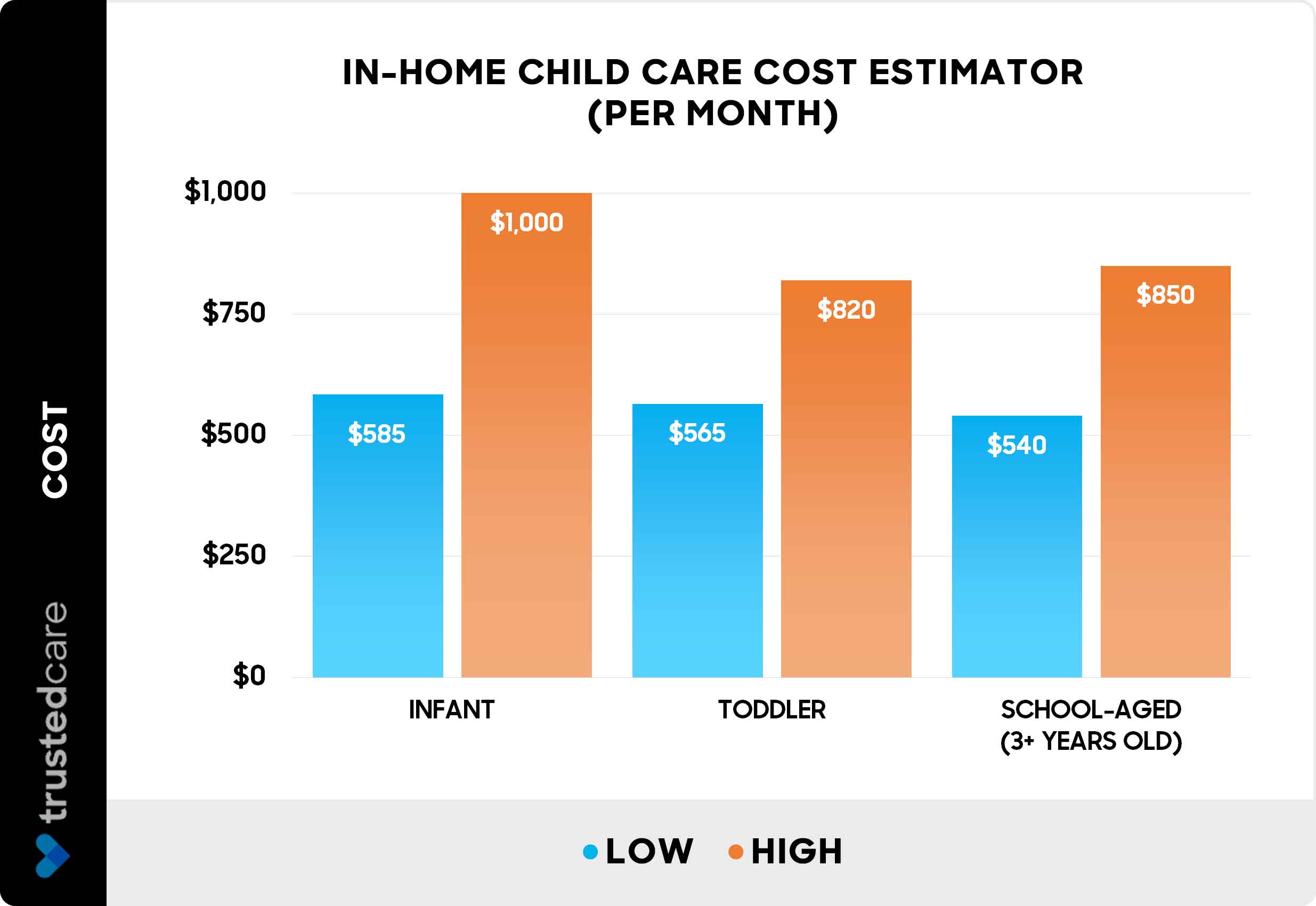
Image Source: static.trustedcare.com
Deciphering the Factors Influencing Your Rates
Setting your rates isn’t a one-size-fits-all situation. Many elements come into play, from your experience to the specific needs of the family. Let’s break down these key influencers.
Your Experience and Qualifications
More experience often translates to higher earning potential. A caregiver with years of dedicated service, specialized training (like CPR or early childhood education certifications), and glowing references can command a higher caregiver compensation package.
- Entry-Level Caregivers: May start at the lower end of the spectrum, perhaps $15-$20 per hour.
- Experienced Caregivers: With 3-5 years of experience, rates can move to $20-$25 per hour.
- Highly Experienced/Specialized Caregivers: Those with advanced degrees, specific certifications (e.g., special needs care, newborn care specialist), or extensive experience in challenging situations might charge $25-$35+ per hour.
The Number of Children
The complexity and workload increase with each additional child. Therefore, it’s standard practice to adjust your rates based on the per child fee.
- Single Child: The base hourly rate applies.
- Two Children: Expect an increase, often 25-50% of your base hourly rate added for the second child.
- Three or More Children: Further adjustments are necessary. Some caregivers may charge a flat rate per child or increase the hourly rate by a set amount for each additional child.
Table: Example Rate Adjustments for Multiple Children
| Number of Children | Typical Rate Adjustment | Example Hourly Rate (Base $20/hr) |
|---|---|---|
| 1 | Base Rate | $20.00 |
| 2 | Add 25%-50% of base rate | $25.00 – $30.00 |
| 3 | Add 50%-75% of base rate | $30.00 – $35.00 |
| 4+ | Negotiable, often higher per child | $35.00+ |
Location and Cost of Living
Childcare costs vary dramatically by geographic location. In areas with a high cost of living, hourly rates and overall nanny salary expectations will naturally be higher to reflect local economic conditions. Researching the market rate in your specific city or region is crucial.
- Urban Centers: Typically have higher rates due to demand and cost of living.
- Suburban Areas: Often fall within the mid-range.
- Rural Areas: May have lower rates, but demand can also be a factor.
Hours and Schedule Flexibility
The hours you work and the flexibility you offer can impact your pricing.
- Standard Hours (e.g., Monday-Friday, 9 am-5 pm): Usually charged at your base hourly rate.
- Weekend Childcare: Many caregivers charge a premium for weekend childcare, often 1.5 to 2 times their regular hourly rate, due to the disruption of personal time.
- Overnight Care Rates: Overnight care rates are typically calculated differently. Some charge a flat overnight fee (e.g., $150-$300 for a 10-12 hour period), while others might charge an hourly rate for waking hours and a reduced hourly rate for sleeping hours. Always clarify expectations beforehand.
- Irregular Hours/Last-Minute Requests: You can also add a surcharge for very short notice or highly unpredictable schedules.
Specific Duties and Responsibilities
Beyond basic supervision, families may require additional services. These often warrant an increase in your rate.
- Meal Preparation: Preparing nutritious meals and snacks for the children.
- Light Housekeeping: Tidying up play areas, children’s rooms, and children’s laundry.
- Driving: Transporting children to and from activities, school, or appointments.
- Homework Help: Assisting with schoolwork.
- Special Needs Care: Providing care for children with specific medical, developmental, or behavioral needs requires specialized skills and usually commands higher caregiver compensation.
Establishing Your Daily and Weekly Rates
While hourly rates are common, some families prefer or require daily rate or weekly arrangements. This can provide more predictable income for you and predictable parent fees for them.
Calculating Daily Rates
A daily rate is often calculated by multiplying your hourly rate by the expected number of hours in a day, plus a small premium for the guaranteed block of time.
- Formula: (Hourly Rate × Expected Daily Hours) + Premium (Optional, e.g., 10-15%)
- Example: If your hourly rate is $22 and you work 8 hours a day, your daily rate might be $176. Adding a 10% premium for a guaranteed day could bring it to $193.60.
Setting Weekly Rates
A weekly rate is typically for families needing consistent, full-time or part-time care over several days. This often involves a slight discount compared to paying strictly hourly for the same number of hours.
- Consider: The total expected hours per week, any additional duties, and the regularity of the schedule.
- Example: For a family needing 40 hours of care per week at $22/hour ($880 total if paid hourly), you might offer a weekly rate of $850-$875 as a package deal.
Understanding Nanny Salary vs. Hourly Rates
It’s important to distinguish between being paid an hourly rate as an independent caregiver and being considered a nanny salary employee.
- Hourly Rate: You are likely an independent contractor. You set your own rates, manage your own taxes (including self-employment tax), and may be responsible for your own benefits.
- Nanny Salary: This often implies an employer-employee relationship. The family might handle payroll, taxes (withholding), and potentially offer benefits like paid time off or health insurance contributions. If you’re operating as a nanny, the family will typically set a salary based on industry standards and your specific role.
When negotiating, clarify whether the offered rate is a gross rate (before taxes) or a net rate (after taxes), though most caregivers quote a gross rate.
Researching the Market Rate
To ensure your rates are competitive and fair, you must research the market rate in your area.
Methods for Researching Market Rates
- Online Job Boards: Websites like Care.com, Sittercity, and Indeed often list childcare positions with stated rates.
- Local Parent Groups: Facebook groups, community forums, and local parenting websites can provide insights into what other families are paying.
- Networking: Talk to other nannies or in-home caregivers in your area. They might be willing to share general rate information.
- Nanny Agencies: If you’re considering working with an agency, they will have data on prevailing rates for their placements.
Factors Affecting Market Rates
- Demand: High demand for childcare in an area will drive up rates.
- Supply of Caregivers: A shortage of qualified caregivers can also increase prices.
- Economic Conditions: Local employment rates and general economic health can influence what families can afford.
Developing Your Rate Sheet
Once you’ve done your research and considered all the influencing factors, create a clear rate sheet. This document outlines your standard prices for various services.
Components of a Rate Sheet
- Hourly Rate: Your base rate for standard care.
- Additional Child Fee: The increment added for each extra child.
- Daily Rate: The fixed price for a full day of care.
- Overnight Care Rate: Your fee for sleeping or being present overnight.
- Weekend/Holiday Rate: Premiums for working on weekends or holidays.
- Late Fee: A charge for parents arriving late for pickup.
- Cancellation Policy: Outline fees for last-minute cancellations by either party.
- Additional Services: List rates for tasks like meal prep, driving, etc.
Example Rate Sheet Snippet:
- Base Hourly Rate (1 child): $22
- Additional Child Fee: + $5/hour per child
- Full-Day Rate (up to 10 hours): $200
- Overnight Care (10 pm – 7 am): $200 flat fee
- Weekend Hourly Rate: $33/hour
- Late Pickup Fee: $10 per 15 minutes after agreed-upon time.
Negotiating and Presenting Your Rates to Families
Confidence and clarity are key when discussing parent fees and your rates.
Initial Consultation
Use the first meeting to discuss the family’s needs and your services. This is also when you present your rates.
- Be Prepared: Have your rate sheet handy.
- Listen Actively: Understand their budget and expectations.
- Explain Your Value: Highlight your experience, qualifications, and the quality of care you provide. Don’t just state numbers; justify them.
Negotiation Strategies
- Know Your Minimum: Have a firm bottom line in mind.
- Bundle Services: If a family needs multiple services (e.g., full-time care plus driving), you might offer a slightly reduced overall weekly rate.
- Trial Period: Consider offering a trial period with a slight adjustment to your standard rate to ensure a good fit for both parties.
- Be Flexible (Within Reason): If a family can’t quite meet your top rate, consider if a small compromise is acceptable, especially if their needs align well with your availability.
Contractual Agreements
Always formalize your agreement in writing. A clear contract protects both you and the family, outlining hours, rates, responsibilities, cancellation policies, and payment schedules. This minimizes misunderstandings and ensures consistent caregiver compensation.
Additional Considerations for In-Home Childcare Pricing
Beyond the basic rates, a few other aspects can affect your overall earnings and how families perceive childcare costs.
Taxes
As an independent contractor, you are responsible for setting aside money for taxes. This includes federal, state, and local income taxes, as well as self-employment taxes (Social Security and Medicare). Factor these costs into your pricing. For example, if you need to earn $22/hour after taxes and your tax burden is 20%, you’ll need to charge closer to $27.50/hour.
Benefits
While not always the case for independent caregivers, some families may offer benefits that can be factored into the overall nanny salary picture.
- Paid Time Off (PTO): Vacation days, sick days.
- Paid Holidays: When you don’t work but still get paid.
- Mileage Reimbursement: If you use your car for transporting children.
- Health Insurance Stipend: Contribution towards health insurance costs.
When discussing compensation, consider the total package, not just the hourly rate.
Niche Services and Specializations
If you specialize in a niche area, you can often charge a premium.
- Infant Care Specialists: Highly sought after and can command higher rates.
- Special Needs Caregivers: Expertise in conditions like autism, ADHD, or physical disabilities is valuable.
- Bilingual Caregivers: Fluency in multiple languages can be a significant asset.
- Montessori/Waldorf Trained: Experience with specific educational philosophies.
These specializations demonstrate a higher level of skill and commitment, justifying increased caregiver compensation.
Frequently Asked Questions (FAQ)
Q1: What is the difference between an hourly rate and a flat daily rate?
An hourly rate is charged based on the exact number of hours worked. A daily rate is a fixed price for a full day of care, regardless of minor variations in hours. Families often prefer daily rates for predictable schedules, while hourly rates offer flexibility for irregular hours.
Q2: How do I determine the “market rate” for my area?
Research online job boards, local parent groups, and talk to other caregivers. Consider your experience, qualifications, and the specific services you offer. Look for common rates for similar positions in your geographic location.
Q3: Should I charge more for weekends or holidays?
Yes, it’s standard practice to charge a premium for weekend childcare and holidays. This is because these times are typically considered personal time, and working them involves a greater sacrifice. Rates often increase by 50% to 100% for these days.
Q4: What if a family wants me to do more than just childcare?
If a family requests additional duties like extensive housekeeping, pet care, or running errands unrelated to the children, you should discuss a revised rate or a separate fee for these services. It’s best to clarify all expectations and associated costs upfront.
Q5: How do I handle late payments or cancellations?
A clear cancellation policy in your contract is essential. For late payments, you can include a late fee clause. It’s also good practice to request a deposit or first payment upfront to secure your booking.
Q6: What is a reasonable per-child fee if I care for multiple children from the same family?
A common approach is to charge your base hourly rate for the first child and add a percentage (e.g., 25-50%) of your hourly rate for each additional child. Some caregivers opt for a flat per child fee addition to their hourly rate.
Q7: How do overnight care rates work?
Overnight care rates can vary. Some charge a flat fee for the entire overnight period (e.g., 8-12 hours), while others may charge a higher hourly rate for waking hours and a reduced hourly rate for sleeping hours. Always discuss the specific expectations for the overnight period.
Q8: How can I justify my rates to potential clients?
Clearly articulate your experience, education, certifications, and any specialized skills you possess. Highlight the value you bring in terms of safety, education, engagement, and peace of mind for the parents. Presenting a professional rate sheet also helps.
Q9: Should my rates be different for infants versus older children?
Generally, infant care requires more hands-on attention, specialized knowledge (feeding, sleep training, safety), and is often more demanding. Therefore, you might consider charging a slightly higher rate for infant care compared to caring for older, more independent children.
Q10: What are “parent fees” in the context of childcare?
Parent fees are simply the amounts that parents pay for childcare services. This term encompasses hourly rates, daily rates, weekly rates, and any additional charges agreed upon between the caregiver and the family. It’s the total cost of care from the parents’ perspective.