
Can you test 14k gold at home? Yes, you can test 14k gold at home using a few simple methods. This guide will show you how to check gold authenticity and perform a gold purity test without professional equipment. Fathoming whether your gold is genuine 14k is possible with these DIY gold verification techniques.
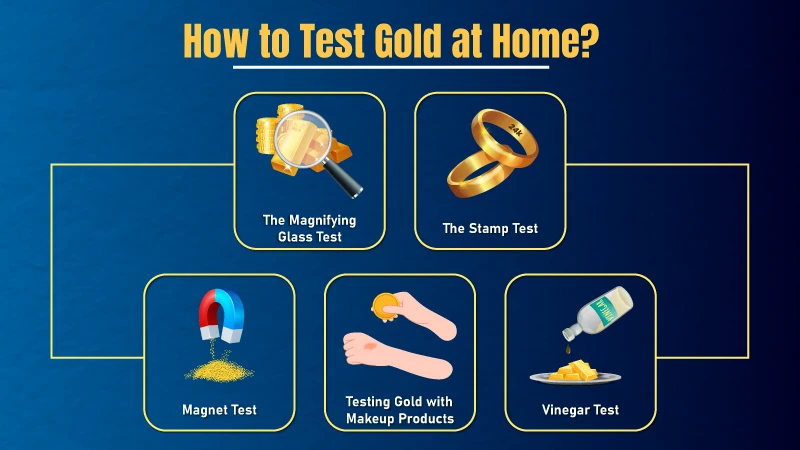
Image Source: res.cloudinary.com
What is 14k Gold?
Before diving into testing, let’s clarify what 14k gold is. Gold is a soft metal, making it impractical to use in its pure form for jewelry. To make it more durable and affordable, pure gold (24 karat) is mixed with other metals like copper, silver, zinc, or nickel. This mixture is called an alloy.
14k gold means that the item is composed of 14 parts pure gold and 10 parts other metals. This translates to 58.3% pure gold (14 divided by 24). Jewelry made of 14k gold is a popular choice because it balances the beauty of gold with increased durability compared to higher karats.
Why Test Your Gold at Home?
There are several reasons why you might want to perform at-home gold testing. Perhaps you’ve inherited jewelry and want to know its value, or you’re considering buying or selling gold and want to be sure of its authenticity. Maybe you’re simply curious about the gold items you own. Whatever your reason, knowing how to check gold authenticity is a useful skill. These simple gold tests can give you peace of mind.
Essential Tools for At-Home Gold Testing
While professional jewelers have specialized equipment, you can conduct a gold purity test at home with a few common items. Here’s what you’ll generally need:
- Magnifying Glass or Loupe: For examining hallmarks.
- White Ceramic Plate or Unvarnished Tile: For the streak test.
- Strong Magnet: To check for magnetic properties.
- Gold Testing Kit (Acid Test Kit): This is the most reliable DIY method for checking gold authenticity. It includes a testing stone and various acids.
- Soft Cloth: For cleaning your gold items.
- Gloves: To protect your hands when using acid.
- Good Lighting: To see details clearly.
Simple Gold Tests: Your First Steps
Before you get into more involved methods, there are a couple of very basic checks you can do. These are not foolproof but can sometimes quickly indicate if something is not gold.
The Magnet Test for Gold
Gold is not magnetic. If your gold item sticks to a magnet, it is likely not pure gold or even a gold alloy. It’s probably made from a magnetic metal like iron or steel, with a gold plating.
How to perform the magnet test:
- Find a strong magnet, preferably a neodymium magnet. Regular refrigerator magnets might not be strong enough.
- Hold the magnet near your gold item.
- If the item is attracted to the magnet, it’s likely not gold.
Important Note: Some metals used in gold alloys, like nickel, can be slightly magnetic. So, if your item isn’t attracted to a magnet, it doesn’t automatically confirm it’s real gold, but if it is attracted, it’s almost certainly fake.
Examining Gold Hallmarks
Gold hallmarks are official stamps or engravings found on gold jewelry that indicate its purity, the manufacturer, and sometimes the year of manufacture. Identifying 14k gold often starts with spotting these markings.
What to look for:
- Karat Marks: The most common markings for 14k gold are “14K” or “14kt”. You might also see “585”, which signifies 58.5% gold content (very close to 14k’s 58.3%).
- Manufacturer’s Mark: A symbol or initials representing the company that made the item.
- Country of Origin: Sometimes marked.
How to examine hallmarks:
- Use a magnifying glass or a jeweler’s loupe to get a close-up view.
- Look for clear, crisp markings. Faint or smudged marks could be a sign of a fake or a poorly made item.
- Check if the hallmark looks consistent with the rest of the item’s craftsmanship.
Limitations: Hallmarks can be faked. A hallmark is a good indicator, but it’s not definitive proof on its own.
The Gold Streak Test
The gold streak test is another simple method that can help you assess gold authenticity. It relies on the fact that pure gold leaves a yellow streak, while other metals leave different colored streaks.
How to perform the gold streak test:
- Find an unglazed ceramic surface. An unvarnished tile or the back of a ceramic plate that you don’t use for food is ideal.
- Gently rub the gold item across the ceramic surface.
- Observe the color of the streak left behind.
Interpreting the streak:
- Gold Streak: A bright yellow or golden streak usually indicates real gold.
- Black or Gray Streak: This often means the item is made of pyrite or another metal that isn’t gold.
- Reddish Streak: This could indicate brass or a copper alloy.
Limitations: This test can sometimes be a bit subjective. Also, very thin gold plating might wear off and leave a colored streak from the base metal underneath. It’s best to perform this on an inconspicuous area.
The Acid Gold Test: A More Reliable Method
The acid gold test is considered the most reliable method for DIY gold verification. It involves using specific acids to test the metal’s reaction. Different acids are formulated to react with specific gold karats.
Safety First!
- Always wear gloves and eye protection when handling acids.
- Work in a well-ventilated area.
- Keep acids away from children and pets.
- If acid gets on your skin, rinse immediately with plenty of water.
- Follow the instructions provided with your gold testing kit carefully.
How the Acid Gold Test Works:
A gold testing kit typically comes with:
- A Testing Stone: A black, unglazed ceramic or basalt stone.
- Acid Bottles: Each bottle contains a different acid solution designed to test specific gold karats (e.g., acid for 10K, 14K, 18K, 22K).
Performing the Test for 14k Gold:
- Clean Your Gold Item: Make sure the item is clean and free of any oils or lotions.
- Make a Scratch on the Stone: Gently rub your gold item across the testing stone. You want to leave a visible streak of the metal on the stone. For better results, you might want to scratch a small, inconspicuous area of the item itself, or use a small file to remove a tiny bit of metal from a hidden spot.
- Apply the 14K Acid: Place a small drop of the acid labeled for 14K gold onto the streak of metal on the stone.
-
Observe the Reaction:
- If the streak disappears or dissolves: The item is not 14K gold. It could be plated or a lower karat.
- If the streak remains unchanged: This indicates the item is likely 14K gold or higher.
- If the streak turns milky or changes color: This suggests it’s a lower karat or plated.
Testing Different Karats:
To be thorough, you can test your item against multiple acid strengths:
- Start with a lower karat acid (e.g., 10K). If the streak dissolves, it’s not 10K or higher.
- Then move up to 14K. If it reacts, try 18K.
- If the streak remains on the stone when tested with 14K acid but disappears with 18K acid, it confirms your item is 14K gold.
Important Considerations for Acid Testing:
- Gold Plating: This test is very effective for identifying gold plating. If the item is gold plated, the acid will likely dissolve the plating and reveal a different colored metal underneath.
- Alloys: Different gold alloys have slightly different colors and reactions. The acid test targets the gold content itself.
- Accuracy: The accuracy of this test depends on the quality of the testing kit and proper application.
Other Indicators of Gold Authenticity
While the above tests are the most common for identifying 14k gold, you can also look for other subtle clues.
Weight and Feel
Real gold is dense. If a gold item feels surprisingly light for its size, it might be hollow or made with a less dense metal. However, this is a subjective observation and not a reliable test on its own. Comparing the weight to a known piece of gold of similar size can offer some insight.
Color Consistency
Look for consistent color throughout the item. If you see areas where the color is significantly different, or if there are patches that appear to be a different metal, it could be a sign of plating wearing off.
What to Do If You’re Still Unsure
If you’ve performed these tests and are still not confident about your gold’s authenticity, or if you have particularly valuable or antique pieces, the best course of action is to consult a professional jeweler or a certified appraiser. They have advanced equipment like X-ray fluorescence (XRF) analyzers that can determine the precise metal composition without damaging the item.
Summary Table of Home Gold Tests
Here’s a quick reference to help you remember the different at-home gold testing methods:
| Test Name | What it Checks | How it Works | Reliability | Notes |
|---|---|---|---|---|
| Magnet Test | Whether the item is magnetic | Gold is not magnetic. If attracted to a magnet, it’s likely fake or plated. | Low (indicator) | Use a strong magnet. Non-magnetic doesn’t guarantee gold. |
| Hallmark Check | Official markings indicating karat and maker | Look for “14K”, “14kt”, or “585”. | Medium (can be faked) | Requires magnification. Fakes exist. |
| Streak Test | Color of the metal’s residue on ceramic | Real gold leaves a yellow streak. Other metals leave different colors. | Medium (subjective) | Best on an inconspicuous area. Gold plating may rub off. |
| Acid Test | Reaction of metal to specific acids | Acids dissolve specific karats. Observe how the streak reacts to 14K acid. | High (DIY) | Requires a gold testing kit and safety precautions. |
FAQ: Frequently Asked Questions About 14k Gold Testing
Q1: Can I test gold with household items like vinegar or bleach?
A1: While some household items might cause a reaction with fake metals, they are not reliable for accurate gold testing. Vinegar can corrode some base metals, but it won’t definitively prove if your item is 14k gold. Bleach can damage real gold by creating white spots if it contains certain alloys, but it’s a risky and imprecise method. It’s better to use dedicated testing kits.
Q2: What is the most reliable way to test 14k gold at home?
A2: The most reliable DIY method is the acid gold test, also known as the scratch test with acid. This involves using a testing stone and specific acids designed to react with different gold karats.
Q3: My gold item has a hallmark. Does that mean it’s definitely real 14k gold?
A3: Hallmarks are good indicators of authenticity and purity, but they can be counterfeited. While a clear and correct hallmark is a strong sign, it’s best to confirm with other tests like the acid test for complete certainty.
Q4: What is the difference between 14k gold and 18k gold?
A4: The difference lies in the gold purity. 14k gold is 58.3% pure gold (14 parts out of 24), while 18k gold is 75% pure gold (18 parts out of 24). 18k gold is softer and more valuable due to its higher gold content.
Q5: Will the acid test damage my gold jewelry?
A5: If performed correctly on an inconspicuous area or by scratching the testing stone, the acid test should not significantly damage your jewelry. For valuable pieces, it’s advisable to test a very small, hidden spot or consult a professional.
Q6: What does “585” mean on jewelry?
A6: The number “585” stamped on jewelry indicates that it is 14 karat gold. It refers to the percentage of pure gold in the alloy, meaning there are 585 parts per thousand of pure gold, which is equivalent to 58.5%. This is very close to the standard 58.3% for 14k gold.
Q7: Can I test gold plating at home?
A7: Yes, the acid gold test is excellent for identifying gold plating. If your item is plated, the acid will likely eat through the thin layer of gold and reveal the base metal underneath, often causing a color change or dissolving the streak. The magnet test can also indicate plating if the item is attracted to the magnet.
By employing these methods, you can perform accurate home testing and gain confidence in identifying your 14k gold items. Remember to prioritize safety, especially when using acids.