
Can you transfer a home title in Texas without a lawyer? Yes, it is possible to transfer a home title in Texas without a lawyer, but it’s a complex process with legal implications, and mistakes can be costly. For most people, consulting with a real estate attorney is highly recommended.
Transferring a home title in Texas involves several critical steps to ensure the process is legally sound and your ownership is properly recognized. Whether you’re gifting a property, selling it, or dealing with an inheritance, knowing the exact procedures for a Texas deed transfer is paramount. This guide will walk you through each stage of how to transfer property in Texas, covering common scenarios like Texas gifting property, Texas inheritance transfer, and even how to change home ownership Texas. We’ll also touch upon the importance of Texas deed preparation and specific Texas title transfer requirements.
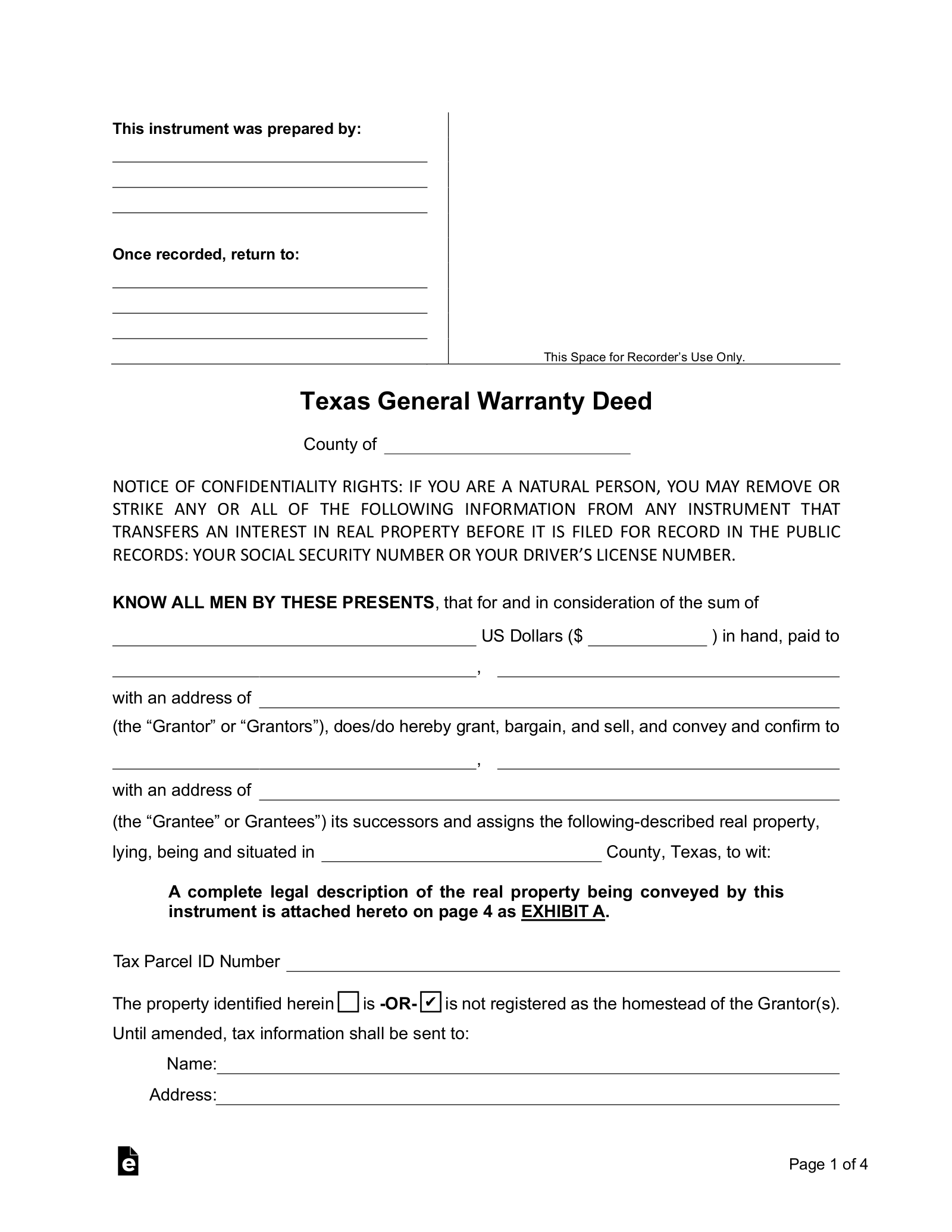
Image Source: eforms.com
Deciphering the Deed: What is a Texas Deed Transfer?
At its core, a Texas deed transfer is the legal document that conveys ownership of real estate from one party (the grantor) to another (the grantee). Think of it as the official “hand-off” of the property. This isn’t just a handshake agreement; it’s a formal, written instrument that must meet strict legal standards in Texas to be valid. The process of Texas deed transfer is fundamental to any Texas real estate transfer.
Types of Deeds in Texas
Different situations call for different types of deeds. The most common ones you’ll encounter for transferring property are:
- General Warranty Deed: This is the most protective deed for the buyer. The grantor guarantees that they own the property, have the right to sell it, and that there are no hidden liens or claims against it, not even from before the grantor owned it. This is typically used in standard sales.
- Special Warranty Deed: With this deed, the grantor only guarantees the title against issues that arose during their period of ownership. They’re essentially saying, “I didn’t do anything to mess up the title while I owned it, but I can’t speak for what happened before.” This is common in commercial transactions or when a representative (like an executor of an estate) is selling.
- Quitclaim Deed Texas: A quitclaim deed Texas is used to transfer whatever interest the grantor has in a property, without making any promises about the title’s validity or the grantor’s ownership. It’s often used between family members, to clear up title defects, or when someone is simply giving up their interest in a property. It offers the least protection to the grantee.
Steps for a Texas Deed Transfer
The process of transferring a home title in Texas, regardless of the specific reason, generally follows a series of well-defined steps.
Step 1: Determine the Purpose and Type of Transfer
Before you begin any paperwork, you need to clearly understand why you are transferring the title and what type of transfer is most appropriate.
- Sale: This involves a buyer and seller, with money exchanging hands. A General Warranty Deed is usually preferred.
- Gift: This is when you transfer property to someone without receiving payment. A Quitclaim Deed or Special Warranty Deed might be used, depending on the grantor’s preference for conveying warranties. This is a common way to handle Texas gifting property.
- Inheritance: When someone passes away, their property might be transferred to heirs through a will or by intestacy laws. This often involves Texas probate property transfer or can sometimes be handled through affidavits outside of formal probate if the estate is small.
- Divorce: Property may be transferred between spouses as part of a divorce decree.
- Adding or Removing a Name: This could be to add a spouse to the title or remove a former owner.
Step 2: Gather Necessary Information
Accurate information is key to proper Texas deed preparation. You’ll need:
- Grantor(s) Full Legal Name(s): The current owner(s) of the property.
- Grantee(s) Full Legal Name(s): The new owner(s).
- Property Description: The complete legal description of the property, found on the existing deed. This is not just the street address but usually includes metes and bounds or lot and block numbers.
- Existing Deed: A copy of the current deed that shows the grantor’s ownership.
- Consideration: The amount of money exchanged for the property, if any. Even in a gift, it’s often noted as “ten dollars and other good and valuable consideration” for legal purposes.
Step 3: Prepare the New Deed
This is where Texas deed preparation becomes crucial. The deed is the legal document that effectuates the transfer.
Key Components of a Texas Deed:
- Grantor’s Information: Full legal name and marital status.
- Grantee’s Information: Full legal name and marital status.
- Property Description: The exact legal description of the property. This is vital and must be copied precisely from the current deed.
- Statement of Consideration: The value exchanged for the property.
- Granting Clause: Language that clearly states the grantor is conveying their interest to the grantee (e.g., “grants, sells, and conveys”).
- Habendum Clause: Defines the estate being granted (e.g., “to have and to hold…”).
- Warranties: Depending on the type of deed (general warranty, special warranty, quitclaim).
- Signatures: The grantor(s) must sign the deed.
- Notarization: The grantor’s signature must be notarized.
Using Texas Deed Forms:
While online forms and templates are available, using them requires extreme caution. The specific wording and adherence to Texas law are critical. Errors in deed preparation can lead to title defects, making future sales or refinances difficult, or even invalidating the transfer.
Table 1: Deed Types and Common Uses in Texas
| Deed Type | Grantor Guarantees | Typical Use Cases | Grantee Protection |
|---|---|---|---|
| General Warranty Deed | Title against all claims, past and present | Standard residential and commercial sales | Highest |
| Special Warranty Deed | Title against claims arising only during the grantor’s ownership | Commercial sales, sales by executors or guardians, transfers between related entities | Moderate |
| Quitclaim Deed Texas | No guarantees; transfers only the grantor’s current interest | Transfers between family members, clearing title defects, releasing an interest in property | Lowest |
| Deed of Trust/Foreclosure Deed | Used in foreclosure proceedings, transfers ownership due to non-payment of a loan. | Foreclosure sales | N/A (Legal Process) |
| Transfer on Death Deed | Transfers property automatically upon the grantor’s death, avoiding probate. | Estate planning, simple transfer to beneficiaries upon death | Varies by state law |
Step 4: Sign and Notarize the Deed
The grantor(s) must sign the deed in the presence of a Notary Public. The notary will verify the identity of the signer(s) and witness the signature. The notary then affixes their seal and signature. This is a crucial step for the validity of the Texas title transfer requirements.
Step 5: Execute a Texas Real Estate Transfer Tax Form (if applicable)
Texas does not have a state-level real estate transfer tax. However, some counties or municipalities may have their own local transfer fees. You will need to check with the county clerk’s office in the county where the property is located. For most Texas real estate transfer scenarios, this might not be a direct tax but could involve recording fees.
Step 6: Record the Deed with the County Clerk
This is the most critical step to finalize the transfer and make it public record. The new deed must be filed with the County Clerk in the county where the property is situated.
- Where to File: Go to the County Clerk’s office for the county in which the property is located.
- What to Bring: The original, signed, and notarized deed.
- Fees: There will be a recording fee, which varies by county. You may also need to pay taxes or fees based on the property’s value, depending on local ordinances.
- Importance of Recording: Recording the deed provides public notice of the ownership change. Until it’s recorded, the transfer is not fully effective against third parties. This is a key part of how to change home ownership Texas.
Step 7: Update Property Records and Taxes
Once the deed is recorded, the County Clerk’s office will update their records. You should also ensure that:
- Tax Records: The county appraisal district is notified of the ownership change for property tax purposes. The deed itself usually serves this purpose, but it’s good to confirm.
- Title Insurance: If a new owner purchased title insurance, they will need to provide the title company with the recorded deed.
- Homeowners Insurance: The new owner should obtain homeowners insurance and ensure the policy is in force before or immediately after the transfer.
Specific Scenarios for Texas Deed Transfers
Let’s explore some common situations where you might need to transfer a home title in Texas.
Texas Gifting Property
Transferring property as a gift is a common way to help family members or support charitable causes. When you are Texas gifting property, the process is similar to a sale, but there’s no monetary consideration.
- Deed Type: A Quitclaim Deed is often used for gifts as it transfers ownership without the grantor making warranties about the title. However, a Special Warranty Deed can also be used.
- Gift Tax: While you are gifting property, you should be aware of potential gift tax implications. The IRS has annual exclusion limits for gifts. If the value of the gift exceeds these limits, the grantor may need to file a gift tax return (Form 709). It’s advisable to consult a tax professional.
- Steps: Follow the standard deed preparation, signing, notarization, and recording steps outlined above.
Texas Inheritance Transfer
When a homeowner dies, transferring the title to their heirs is a crucial step. This can happen through different legal avenues.
Texas Probate Property Transfer
If the deceased person had a will, their estate will likely go through probate.
- Probate Process: The will is submitted to the court, and an executor is appointed. The executor is responsible for settling the deceased’s debts and distributing assets according to the will.
- Executor’s Deed: The executor may execute a deed (often a Special Warranty Deed or an Executor’s Deed) to transfer the property to the designated heirs.
- Court Order: The transfer is generally authorized by a court order in the probate case.
- Affidavit of Heirship: In certain situations, especially if there is no will and the estate is relatively simple, an Affidavit of Heirship can be used to transfer property without full probate. This is a sworn statement by someone familiar with the deceased and their family history, identifying the legal heirs. It must be filed with the county clerk.
Transferring Property Without Probate in Texas
Texas law allows for certain transfers without the need for formal probate, which can simplify Texas inheritance transfer.
- Small Estate Affidavit: If the total value of the deceased’s estate (excluding the homestead and exempt property) is less than a certain amount, a Small Estate Affidavit can be filed with the court. This allows heirs to transfer title to property without a formal probate.
- Transfer on Death Deed (TOD Deed): Texas law permits Transfer on Death deeds. This allows a property owner to designate beneficiaries who will inherit the property automatically upon the owner’s death, bypassing probate. The deed must be properly prepared, signed, notarized, and recorded during the owner’s lifetime.
How to Change Home Ownership Texas: Adding or Removing a Name
Adding or removing a name from a property title is a common request.
Adding a Spouse or Partner
If you’re married and want to add your spouse to the title, or if you’re buying a home together and want both names on the deed from the start, you’ll need a new deed.
- Deed Type: Often, a Quitclaim Deed or a Special Warranty Deed is used to add a spouse to the title.
- Example: If John Smith owns a home and wants to add his wife, Jane Smith, a deed could be prepared where John Smith is the grantor and “John Smith and Jane Smith” are the grantees.
Removing a Name
This might happen after a divorce or if an owner simply wishes to transfer their interest to the other owner.
- Divorce Decree: If it’s due to a divorce, the divorce decree will often specify who receives the property. A deed is still usually required to officially transfer the title.
- Quitclaim Deed: A Quitclaim Deed is frequently used in these situations where one party is releasing their interest in the property to the other.
- Consideration: Even if there’s no money exchanged, the deed might state nominal consideration.
Important Texas Title Transfer Requirements and Considerations
Beyond the basic steps, several other factors are crucial for a successful Texas title transfer.
Title Insurance
While not legally mandated for the transfer itself, title insurance is highly recommended for the grantee.
- What it Does: It protects the new owner against financial loss from title defects or encumbrances that may not have been discovered during the title search. This could include liens, unpaid taxes, forged documents, or errors in public records.
- Types:
- Owner’s Policy: Protects the buyer’s equity in the property.
- Lender’s Policy: Protects the mortgage lender.
Property Taxes
- Appraisal District: The county appraisal district maintains records of property ownership for tax purposes. When a deed is recorded, it should trigger an update, but it’s wise to confirm with the appraisal district.
- Proration: Property taxes are usually prorated at closing (if it’s a sale), meaning the seller pays taxes up to the closing date, and the buyer pays from the closing date onward.
Outstanding Liens and Mortgages
- Existing Mortgages: If there’s an existing mortgage on the property, it typically needs to be paid off at closing for a sale or handled as part of the Texas inheritance transfer process.
- Clearing Liens: Any liens against the property (e.g., mechanic’s liens, tax liens) must be addressed and cleared before a clean title can be transferred, especially if a new loan is involved.
Texas Deed Preparation: Precision is Key
As emphasized, the accuracy in Texas deed preparation cannot be overstated.
- Legal Description: This must be exact. An incorrect legal description can render the deed invalid.
- Names: Grantor and grantee names must be precise, matching other official documents.
- Signatures: All current owners on title must sign the deed.
Title Companies and Real Estate Attorneys
- Title Companies: These companies play a vital role in real estate transactions. They conduct title searches, issue title insurance, and often handle the closing process, including the preparation and recording of deeds.
- Real Estate Attorneys: For complex transfers, Texas probate property transfer, or if you have any doubts, hiring a real estate attorney is the safest route. They can ensure the deed is correctly drafted, review all documentation, and advise on legal implications.
Frequently Asked Questions (FAQ)
Q1: How long does it take to transfer a home title in Texas?
The actual transfer process, from preparing the deed to recording it, can take anywhere from a few days to a couple of weeks, depending on the efficiency of the parties involved and the county clerk’s office. If probate is involved, it can take much longer.
Q2: Do I need a real estate agent to transfer a home title in Texas?
A real estate agent is typically involved in the sale of a property, helping with marketing, negotiation, and the transaction process. However, they are not directly involved in the legal preparation and recording of the deed itself. A title company or attorney usually handles this.
Q3: Can I transfer my house to my child in Texas without them paying for it?
Yes, you can transfer your house to your child in Texas as a gift. You would typically use a Quitclaim Deed or Special Warranty Deed, and you should be mindful of potential gift tax implications.
Q4: What is the cost of transferring a home title in Texas?
Costs include recording fees charged by the county clerk, potential transfer fees levied by local municipalities, and fees for a title company or attorney if you use their services. These can range from a few hundred to over a thousand dollars.
Q5: What happens if a deed is not recorded in Texas?
If a deed is not recorded, the transfer of ownership is not officially recognized by the public records. This can create problems, as the property could appear to still belong to the original owner, making it difficult to sell or refinance, and potentially exposing it to claims from creditors of the original owner.
Transferring a home title in Texas is a significant legal action that requires careful attention to detail. By following these steps and understanding the nuances of Texas deed transfer, you can ensure a smooth and legally sound Texas real estate transfer. Remember, when in doubt, always consult with a qualified real estate attorney or title professional to navigate the complexities of how to change home ownership Texas.