
The most common kitchen countertop thickness is 1.25 inches (3 cm), but this can vary based on material, design, and personal preference. This guide will help you navigate the world of kitchen countertop thickness.
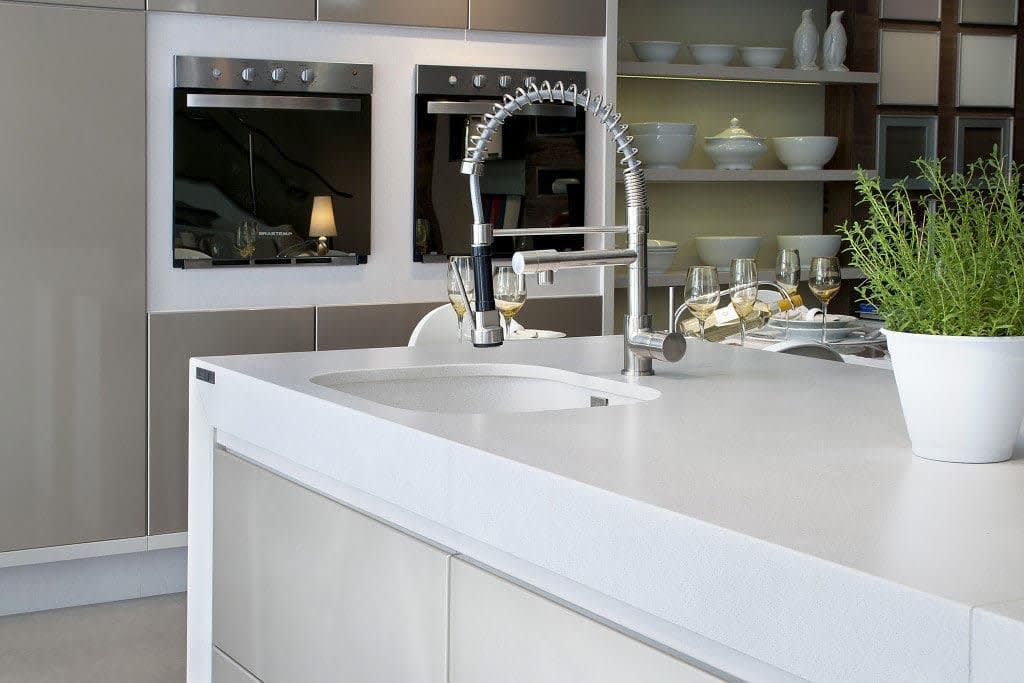
Image Source: images.ctfassets.net
Deciphering Kitchen Countertop Thickness: A Comprehensive Look
When planning your kitchen renovation or simply seeking to enhance your existing culinary space, one crucial detail often comes to mind: the thickness of your kitchen countertops. This seemingly simple measurement plays a significant role in both the aesthetics and the practical functionality of your kitchen. The kitchen countertop thickness is not merely about how substantial a slab of material appears; it influences its durability, the edge profiles you can achieve, and even the overall visual weight it lends to your cabinetry. From the sleek lines of modern designs to the robust feel of traditional styles, countertop thickness is a foundational element that impacts the entire feel of your kitchen.
Standard Kitchen Countertop Dimensions: The Baseline
Most kitchens are designed with a specific standard kitchen counter depth, which typically measures 25 inches from the front edge of your cabinets to the wall. This depth is ample for most kitchen tasks, allowing for comfortable workspace and accommodating standard cabinet depth. When we talk about thickness, the industry standard often hovers around 1.25 inches (3 cm) for many popular materials like granite, quartz, and marble. This thickness provides a good balance of substantial appearance, strength, and cost-effectiveness. It’s a safe and widely accepted choice that suits a broad range of kitchen styles and user needs.
Why the Standard Exists
The prevalence of a standard thickness is rooted in several factors. Firstly, it aligns with the dimensions of standard kitchen cabinets, ensuring a seamless fit and a cohesive look. Secondly, manufacturing processes for many countertop materials are optimized for this thickness, making it more readily available and often more affordable. Lastly, this dimension has been proven over time to offer sufficient structural integrity for everyday kitchen activities, from chopping vegetables to placing heavy appliances.
Exploring Custom Kitchen Countertop Dimensions: Beyond the Standard
While standards provide a helpful starting point, your kitchen is unique, and so are your needs and desires. This is where custom kitchen countertop dimensions come into play. You are not limited to the standard 1.25 inches. Many homeowners opt for thicker countertops to achieve a more luxurious, substantial, or visually impactful look. Thicker slabs can lend a sense of permanence and grandeur, especially for statement pieces like kitchen islands.
Factors Influencing Custom Thickness Choices
Several elements can steer you towards custom dimensions:
- Aesthetic Goals: Do you want a bold, dramatic look? A thicker countertop might be your answer. Conversely, a thinner profile can contribute to a minimalist, airy feel.
- Material Properties: Some materials, like certain types of stone or concrete, benefit from or even require a greater thickness for structural stability, especially when spanning significant distances without support.
- Edge Profile Selection: Certain elaborate edge profiles, such as a waterfall edge or a bullnose, are best showcased on thicker slabs. A thinner countertop might limit the complexity or visual appeal of these decorative edges.
- Structural Considerations: For large islands or countertops extending beyond cabinets, increased thickness can provide necessary support and prevent sagging, especially with heavier materials.
Material-Specific Thickness Considerations
The material you choose for your kitchen countertops will significantly influence the available thickness options and their implications. Each material has unique properties that dictate how it performs at different thicknesses.
Granite Countertop Thickness: Strength and Style
Granite countertop thickness commonly ranges from 2 cm (approximately 0.75 inches) to 3 cm (approximately 1.25 inches). The 3 cm thickness is the most popular choice in North America, offering a robust and luxurious feel. It provides excellent durability and is less prone to chipping or cracking compared to thinner slabs, especially during installation or if heavy items are dropped.
- 2 cm Granite: While thinner, 2 cm granite can still be a viable option, particularly for budget-conscious projects or when installed over a plywood subtop. It’s lighter, which can reduce installation costs, but it requires more careful handling and might offer fewer edge profile options.
- 3 cm Granite: This is the premium choice for granite. It feels more substantial, offers greater resistance to damage, and allows for a wider variety of edge treatments. Its weight requires sturdy cabinetry support.
Quartz Countertop Thickness: Consistency and Customization
Quartz countertop thickness typically mirrors that of granite, with 2 cm and 3 cm being the most common options. Quartz, being an engineered stone, offers remarkable consistency in its properties.
- 2 cm Quartz: Similar to 2 cm granite, this option is lighter and can be more budget-friendly. It’s suitable for many applications but may require a supportive substrate for optimal performance, especially in high-traffic areas.
- 3 cm Quartz: This is the preferred thickness for quartz countertops due to its superior strength and aesthetic appeal. It offers a premium look and feel, is highly durable, and is well-suited for all types of edge profiles. The added thickness enhances its resistance to chipping and thermal shock.
Marble Countertop Thickness: Elegance and Fragility
Marble countertop thickness also commonly comes in 2 cm and 3 cm slabs. However, marble is a softer, more porous stone than granite or quartz, making its thickness particularly important for durability.
- 2 cm Marble: Using 2 cm marble necessitates careful consideration. It is more susceptible to etching and staining due to its porosity, and the thinner slab can be more prone to chipping and cracking, especially around sinks or cooktops where there are cutouts. It requires meticulous sealing and diligent maintenance.
- 3 cm Marble: The 3 cm thickness offers a significant advantage for marble countertops. It provides greater structural integrity, making it more resistant to the stresses of daily kitchen use. While still requiring careful maintenance due to its natural properties, the extra thickness enhances its longevity and reduces the risk of accidental damage. It also allows for a more impressive display of marble’s natural veining.
Butcher Block Countertop Thickness: Warmth and Workability
Butcher block countertop thickness can vary considerably more than stone or engineered materials. Common thicknesses range from 1.5 inches to 2 inches, with some specialty or custom pieces going up to 3 inches or more.
- 1.5-inch Butcher Block: This is a popular choice for its balance of cost and appearance. It’s thick enough to feel substantial and can withstand moderate chopping and food preparation. However, deeper knife cuts might penetrate the surface, requiring more frequent refinishing.
- 2-inch Butcher Block: This thickness offers a more robust and durable surface. It’s better equipped to handle heavy use, including chopping, and is less likely to warp or gouge. The thicker profile also lends a more substantial visual presence to your kitchen.
- 3+ inch Butcher Block: These very thick slabs are often used for statement pieces or specialized work areas. They offer exceptional durability and a commanding presence but come at a higher cost and weight.
Laminate Countertop Thickness: Affordability and Versatility
Laminate countertop thickness is generally more uniform than stone or wood. The core of a laminate countertop is typically particleboard or medium-density fiberboard (MDF), which is then covered with a decorative laminate layer.
- Standard Laminate Thickness: Most standard laminate countertops are around 1.5 inches thick. This thickness is determined by the substrate material and the laminate sheet.
- Thicker Laminate Options: Some manufacturers offer thicker laminate countertops, often around 2 inches, which can provide a more substantial look, mimicking the appearance of thicker stone or butcher block. These thicker options may also allow for more decorative edge treatments. However, the fundamental durability is still tied to the laminate material and the core substrate.
Thickness Requirements for Kitchen Counters: Balancing Form and Function
The thickness requirements for kitchen counters are a crucial consideration that balances aesthetic desires with practical demands. While aesthetics often drive the desire for thicker countertops, structural integrity and functionality cannot be overlooked.
Structural Integrity and Support
- Weight of Material: Heavy materials like granite, quartz, and marble require adequate support. Thicker slabs generally distribute weight more effectively, reducing the risk of bowing or cracking, especially over longer spans.
- Cabinetry Strength: Your kitchen cabinets must be strong enough to support the weight of the countertops, particularly thicker and heavier stone slabs. Ensure your base cabinets are well-constructed and properly installed.
- Support for Cutouts: Areas around sink and cooktop cutouts are inherently weaker. A thicker countertop offers more material around these openings, enhancing their structural stability.
- Overhangs and Islands: If your countertop extends beyond the base cabinets (an overhang) or forms a freestanding island, thickness becomes a critical factor in preventing sagging. Longer overhangs generally require thicker countertops. For islands, especially those with seating overhangs, a minimum of 3 cm (1.25 inches) is often recommended, and thicker slabs might be necessary for substantial overhangs.
Edge Profiles and Their Thickness Needs
The edge profile you choose for your countertop can dramatically influence the required thickness.
- Simple Edge Profiles: Square, eased, or simple bevel edges can be effectively achieved with 2 cm (0.75 inch) or 3 cm (1.25 inch) thick slabs.
- Decorative Edge Profiles: More complex profiles like bullnose, ogee, or DuPont edges often require a minimum of 3 cm (1.25 inch) thickness to allow for the sculpting and detailing. Some intricate profiles might even look best on 4 cm (1.5 inch) thick slabs.
- Waterfall Edges: For waterfall edges, where the countertop material extends vertically down the side of a cabinet or island, using the same thickness for the vertical drop as the horizontal countertop is visually appealing. This often means using 3 cm (1.25 inch) or thicker material for the entire piece.
Average Kitchen Island Countertop Thickness: The Centerpiece
The kitchen island often serves as the focal point of the kitchen, and its countertop thickness plays a crucial role in its visual impact. The average kitchen island countertop thickness often leans towards the thicker side to make a statement.
- Standard Island Thickness: While 1.25 inches (3 cm) is common, many homeowners opt for 1.5 inches (4 cm) or even 2 inches (5 cm) for island countertops. This extra thickness adds a sense of luxury and solidity.
- Seating Overhangs: If your island will have seating, the thickness of the countertop is directly related to the support needed for the overhang. A 1.25-inch (3 cm) countertop might support a 6-inch overhang, while a 1.5-inch (4 cm) countertop could support a 9-10 inch overhang without additional structural supports. Always consult with your fabricator about safe overhang limits based on material and thickness.
- Visual Weight: A thicker countertop on an island can balance the visual weight of a large island structure, making it appear more grounded and substantial.
Factors Influencing Your Thickness Decision
When you’re deciding on the perfect thickness for your kitchen countertops, consider these key elements:
- Budget: Thicker slabs generally cost more due to the increased material and the extra labor required for fabrication and installation.
- Material Choice: As discussed, different materials have inherent thickness options and structural requirements.
- Desired Aesthetic: Do you prefer a sleek, modern look or a more traditional, robust feel? Thickness significantly impacts this.
- Kitchen Design and Layout: The overall size and layout of your kitchen, particularly island design and the presence of significant overhangs, will influence structural needs.
- Intended Use: For heavy-duty prep areas or frequently used surfaces, a thicker countertop may offer greater longevity and resistance to damage.
Installation and Fabrication Nuances
The thickness of your countertop directly impacts the installation process and fabrication options.
- Weight: Thicker countertops are heavier. This means you’ll need more installers, stronger lifting equipment, and potentially more robust cabinetry to support the load.
- Fabrication: Cutting, shaping, and polishing thicker slabs require specialized tools and expertise. This can add to fabrication costs.
- Edge Treatments: Complex edge profiles are more feasible and often look better on thicker materials. If you dream of a dramatic waterfall edge or an elaborate bullnose, a thicker slab is likely necessary.
- Seams: While thickness doesn’t directly affect the number of seams, a thicker slab might allow for more flexibility in placement to minimize visible seams, especially on longer runs.
Common Thicknesses and Their Applications
Here’s a quick summary of common thicknesses and their typical applications:
| Thickness (Inches) | Thickness (cm) | Common Materials | Typical Applications |
|---|---|---|---|
| 0.75 | 2 | Granite, Quartz, Marble | Budget-friendly projects, Lighter use, Requires support |
| 1.25 | 3 | Granite, Quartz, Marble | Most popular standard, Good durability, Versatile |
| 1.5 | 4 | Granite, Quartz, Marble, Butcher Block | Premium look, Enhanced durability, Island countertops |
| 2 | 5 | Butcher Block, Concrete, Quartz (specialty) | High-traffic areas, Statement pieces, Robust worktops |
| 3+ | 7.5+ | Butcher Block, Concrete, Specialty Stones | Custom islands, Unique designs, Maximum durability |
Frequently Asked Questions About Kitchen Countertop Thickness
Q: Can I use a thinner countertop material for my kitchen?
A: Yes, you can, but it’s important to consider the implications. Thinner countertops (like 2 cm or 0.75 inches) are often more budget-friendly and lighter. However, they may require additional support, have fewer edge profile options, and be more susceptible to chipping or cracking, especially with harder materials or in high-traffic areas. Always consult with your countertop fabricator about the best thickness for your chosen material and intended use.
Q: Does a thicker countertop mean it’s more durable?
A: Generally, yes. A thicker countertop provides more material to resist impact, chipping, and scratching. For materials like granite and quartz, 3 cm (1.25 inches) is considered more durable and luxurious than 2 cm (0.75 inches). For materials like butcher block, thicker is almost always more durable and less prone to warping. However, the inherent properties of the material itself are the primary factor in durability, with thickness playing a supporting role.
Q: What is the best thickness for a kitchen island?
A: The best thickness for a kitchen island often depends on the desired aesthetic and functionality. While 3 cm (1.25 inches) is common, many opt for 4 cm (1.5 inches) or even thicker for a more substantial and luxurious look. If your island will have a seating overhang, the thickness is crucial for providing adequate support without needing additional brackets. Always check with your fabricator regarding safe overhangs for specific materials and thicknesses.
Q: Will a thicker countertop cost more?
A: Yes, thicker countertops typically cost more. This is due to the increased amount of raw material used, as well as the additional labor required for fabrication (cutting, shaping, polishing) and installation (handling heavier slabs).
Q: What if I want a unique edge profile? Does thickness matter?
A: Absolutely. Many decorative and complex edge profiles, such as bullnose, ogee, or waterfall edges, require a minimum thickness to be properly fabricated and to achieve their full visual impact. Thicker countertops offer more material to work with, allowing for more intricate and impressive edge treatments.
Q: How does countertop thickness affect installation?
A: Thicker countertops are heavier, which can complicate installation. More people and specialized equipment may be needed to safely lift and position the slabs. The fabrication process itself is also more involved for thicker materials, which can affect lead times and costs.
In conclusion, the thickness of your kitchen countertops is a vital design element that impacts aesthetics, durability, and functionality. By carefully considering your material choices, design aspirations, and practical needs, you can select the perfect thickness to create a beautiful and enduring kitchen space.